

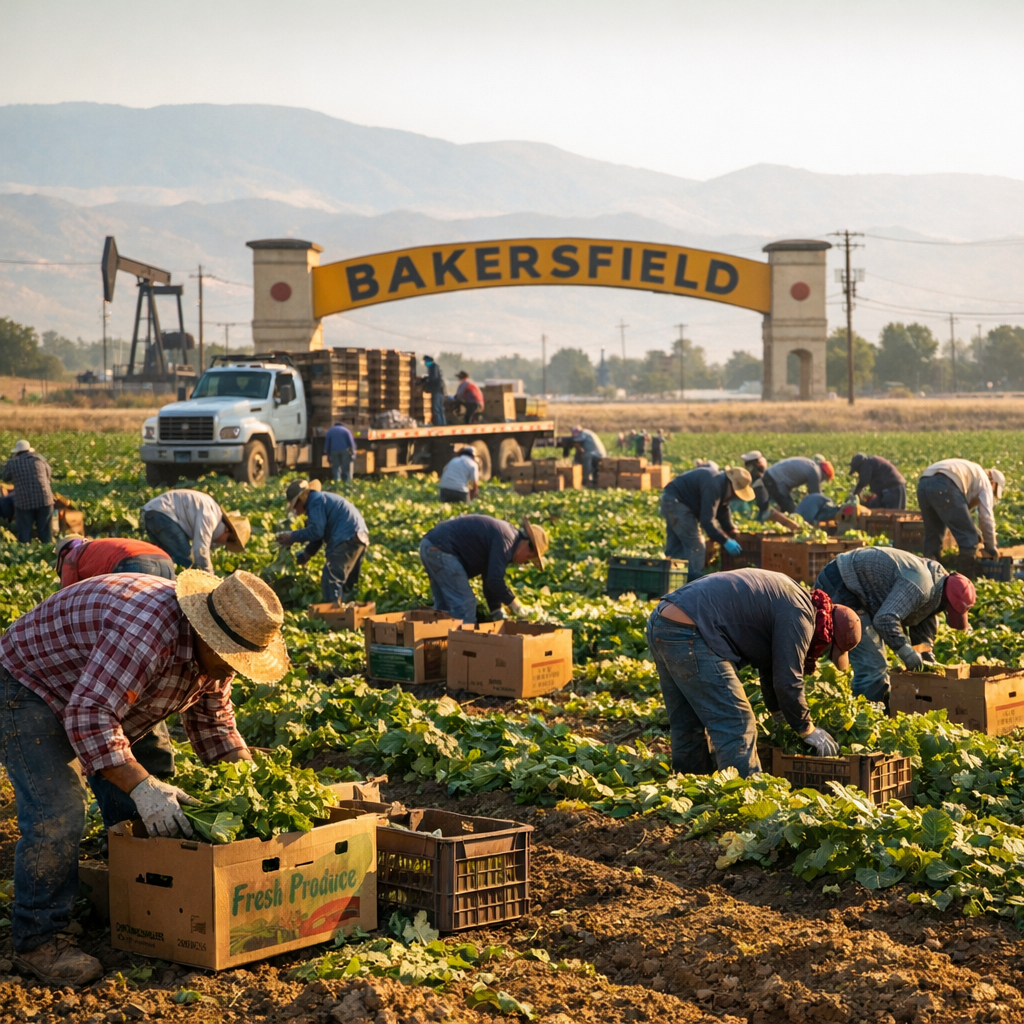
Bakersfield, a city deeply rooted in agriculture and community, is experiencing significant economic changes influenced by national policies. These shifts are particularly evident in sectors like agriculture, immigration, and social services.
Impact on Agriculture
Recent federal tariffs have posed challenges for local farmers. Senator Adam Schiff highlighted concerns that these tariffs could disrupt markets and reduce profits for Central Valley farmers. He emphasized the need for resources to support farmers affected by these policies. Source
Immigration Enforcement and Workforce Dynamics
Immigration enforcement actions, such as Operation “Return to Sender,” have had a profound impact on the local workforce. The operation led to the detention of numerous individuals, causing fear and anxiety among immigrant communities. This has resulted in labor shortages in agriculture, with some farms reporting significant worker absences. Source
Social Services and Economic Strain
Proposed federal cuts to programs like SNAP and Medicaid could have severe consequences for Bakersfield residents. The Center on Budget and Policy Priorities estimated that nearly 370,000 Californians are at risk of losing food stamp benefits due to changes in work requirements. Additionally, California may lose 19% of its federal Medicaid funding over the next decade, totaling $164 billion. These reductions could lead to increased food insecurity and reduced access to healthcare for many families. Source
Looking Ahead
As national policies continue to evolve, Bakersfield’s economic landscape remains in flux. Community leaders and residents are closely monitoring these developments, advocating for policies that support the city’s economic stability and the well-being of its residents.