

By Mason Martinez
Bakersfield’s climate is one of distinct contrasts—sweltering summers, cool winters, and air quality that fluctuates dramatically with the seasons. Understanding the natural and human-driven factors behind these patterns can help locals make better daily choices and safeguard health.
Seasonal Weather Patterns
Summer Heat and Dryness
During summer, Bakersfield regularly sees high temperatures well into the 90s and sometimes exceeding 100°F. Rain is nearly non-existent from late spring through early fall, and vegetation dries out quickly. Low humidity and little wind contribute to persistent dry conditions.
Winter Chills, Fog, and Inversions
Winters bring cooler days and cold nights. Frequent episodes of dense tule fog reduce visibility, especially in low-lying valley areas. Temperature inversions trap cold air near the surface and create a lid over pollutants, preventing dispersion.
Air Quality: What Makes It Worse—and When
Particulate Matter in Winter
From November through February, levels of fine particulate matter (PM2.5) soar. Wood-smoke, vehicle exhaust, agricultural burning, and stagnant air all contribute. Under inversion conditions, pollutants linger—sometimes for days or weeks. Bakersfield often ranks among the U.S. cities with the worst wintertime particle pollution. 1 2
Ozone, Dust, and Heat in Summer
Hot, sunny weather triggers ozone formation as sunlight reacts with pollutants. Dry fields and agricultural activity send dust particles into the air, creating coarse particulate pollution (PM10). Together, they push air quality into unhealthy levels especially for children, older adults, and people with respiratory conditions.
Transitional Seasons: Spring and Fall
Spring sees a gradual shift—temperatures rise, agricultural burning starts up, and early wildfires may emerge. Fall continues heat into October, and harvest dust becomes a bigger factor. Air quality usually worsens before winter inversion patterns set in fully.
Why Bakersfield’s Geography Matters
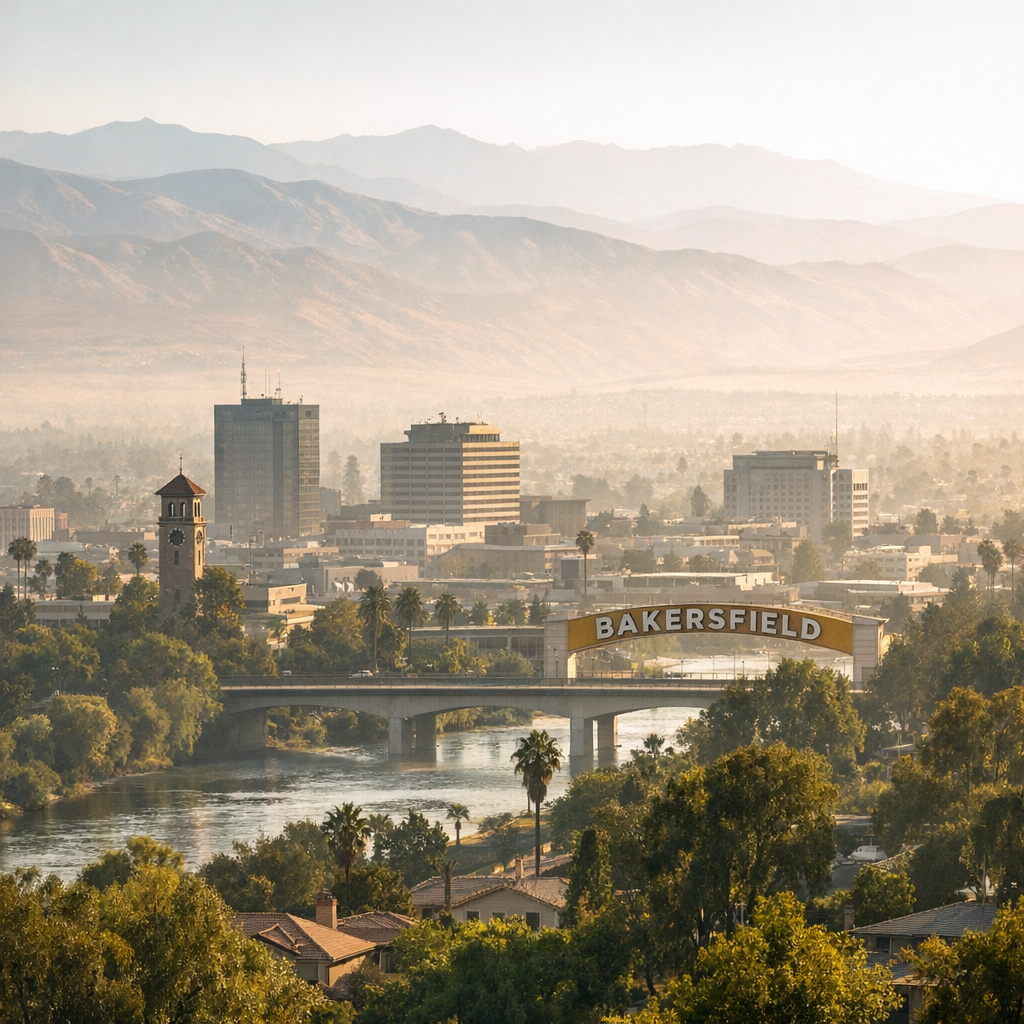
Located in the flat floor of the San Joaquin Valley and surrounded by mountain ranges, Bakersfield forms a natural bowl. When air settles, either in winter inversions or during stagnant summer conditions, that geography prevents pollutants from escaping. Combined with long hours of sun, especially in summer, this makes the city particularly vulnerable to both winter haze and summer smog.
What Residents Can Do
- Check daily Air Quality Index (AQI) forecasts—on poor air days, limit outdoor activities, especially during morning and evening peaks.
- Avoid burning wood in fireplaces or outdoor fires when air is stagnant or under a winter inversion advisory.
- Use air purifiers or keep windows closed when ozone or smoke levels are high.
- Support planting trees and expanding green space—shade lowers temperatures; foliage captures dust.
Policy and Community Efforts
Local agencies along with state air boards are working to monitor and reduce pollutants from oil, agriculture, vehicles, and wood smoke. Efforts include enforcing burn bans, regulating industrial emissions, and installing community-based air monitors to empower residents with real-time data.
Weather and air aren’t separate stories here—they intertwine. Seeing beyond the haze, understanding the trends, and acting on them helps everyone breathe easier in Bakersfield’s ever-changing skies.