

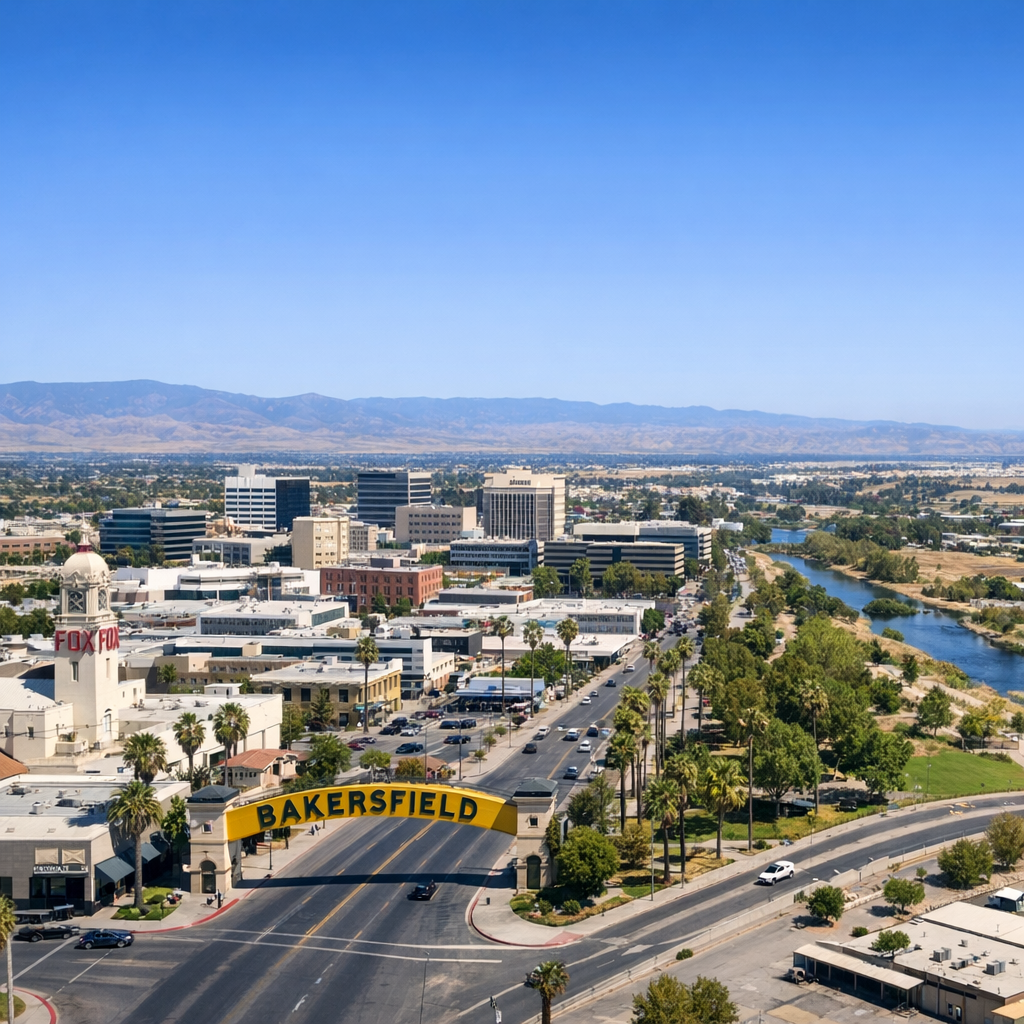
Bakersfield, located in California’s San Joaquin Valley, experiences a hot desert climate characterized by very hot, dry summers and mild winters. The city averages about 191 clear days annually, making it suitable for a variety of outdoor activities and agriculture. However, this climate also presents unique environmental challenges.
Climate Overview
Summers in Bakersfield are notably hot, with temperatures frequently exceeding 90°F (32°C) from April through October. The hottest month is typically July, with average highs around 98°F (37°C). Winters are mild, with average lows in December around 41°F (5°C). Rainfall is scarce, averaging approximately 6.36 inches (161.5 mm) annually, primarily occurring between November and March. Snowfall is rare in the region.
Environmental Challenges
Bakersfield faces significant air quality issues, often ranking among the most polluted cities in the United States. Factors contributing to this include:
- Industrial Emissions: The region’s oil and gas industries, along with extensive agricultural activities, release pollutants into the atmosphere.
- Geography: The surrounding mountains trap air pollutants in the valley, leading to higher concentrations of particulate matter and ozone.
- Climate Conditions: The hot, dry climate exacerbates the formation of ground-level ozone, especially during the summer months.
These factors have led to health concerns among residents, including higher rates of respiratory issues. Efforts to improve air quality are ongoing, focusing on reducing emissions and implementing policies to mitigate pollution.
Conclusion
While Bakersfield’s climate offers many benefits, understanding and addressing the environmental challenges is crucial for the health and well-being of its residents. Staying informed and supporting local initiatives can contribute to a cleaner and healthier environment for all.